Sunday 9 August 2026, 09:04 PM

D-Wave's dual-rail erasure qubit breakthrough slashes quantum error correction overhead.
D-Wave's August 2026 Nature paper reveals a dual-rail erasure qubit gate that natively detects errors, drastically reducing quantum error correction overhead.
In my decade-plus of untangling messy server deployments across the Bay Area, I have learned that a loud crash is a gift. A silent data corruption is a nightmare. It sneaks into your database and quietly breaks things in the background while your dashboards report perfect health.
Quantum computing wrestles with its own microscopic version of this problem. Standard transmon architectures suffer from depolarizing noise, which essentially amounts to random, silent bit-flips. To compensate, engineers historically rely on a brute-force approach, surrounding one logical qubit with a small army of physical qubits just to keep the math stable and catch the errors after the fact.
On August 5, 2026, D-Wave published a peer-reviewed paper in Nature detailing a much more elegant workaround. The research centers on a dual-rail erasure qubit architecture, a technology they acquired when they bought Yale spinout Quantum Circuits Inc. for $550 million earlier in the year.
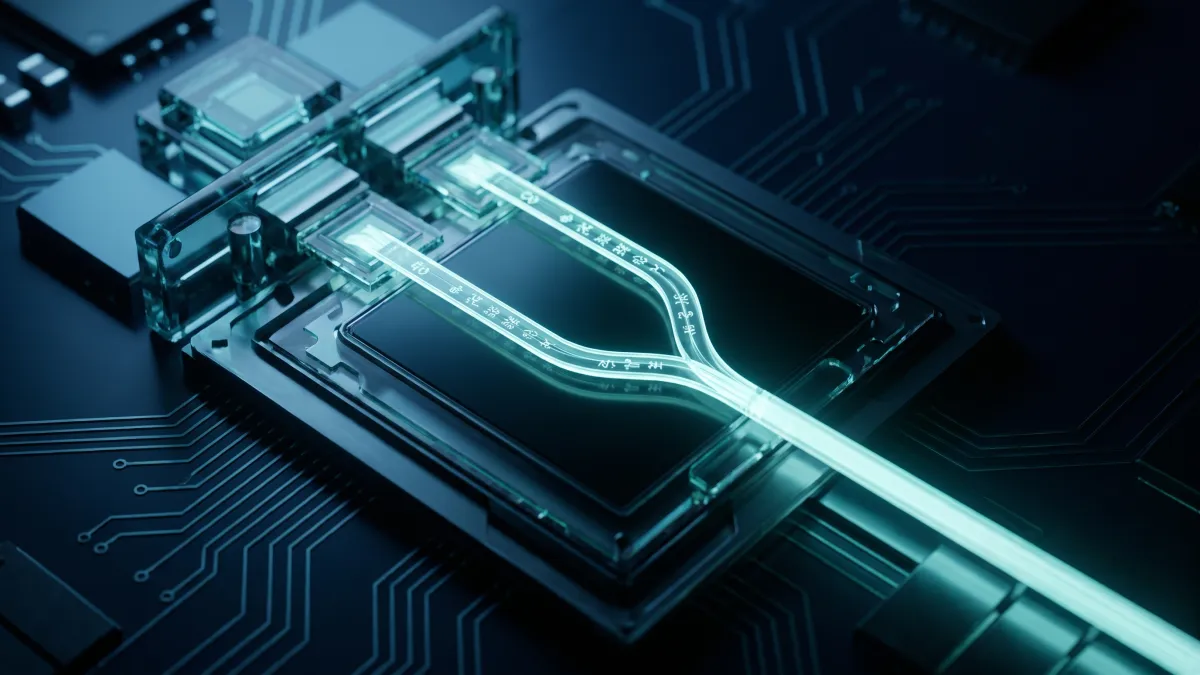
Instead of building a giant safety net of extra qubits, this architecture encodes a logical qubit across two 3D microwave cavities that share a single photon. If that photon escapes into the environment, the hardware instantly flags an empty cavity. It registers an "erasure" right on the spot.
Catching an error the millisecond it happens completely changes the scaling math. Standard noise thresholds hover around 1 percent, but surface codes can tolerate erasure thresholds approaching 25 percent. Because the hardware detects the missing photon natively, the system avoids the cascading failures that plague traditional setups. The newly demonstrated Swap-Wait-Swap (SWS) controlled-phase gate runs at roughly 500 nanoseconds, achieving 99.9 percent physical fidelity alongside a measured erasure probability of only 0.53 percent per gate.
This setup suppresses those silent, computational bit-flip errors down to the 10⁻⁶ level, or one in a million. By isolating the noise to hardware-detectable erasures and dephasing, the system leaves us with errors that are actually manageable.
Simulations project an error reduction factor of 10, effectively making quantum error correction hardware resources ten times cheaper in terms of overhead. This is where the possibilities get genuinely fun to think about. If we no longer need tens of thousands of physical qubits just to babysit a few logical ones, the physical footprint of these machines shrinks dramatically. We could start seeing leaner form factors that do not require their own dedicated warehouse of cryogenic cooling. Maybe quantum coprocessors eventually slot right into standard server racks in a Santa Clara data center, handling specific optimization workloads while classical GPUs do the heavy lifting next door.
D-Wave is moving fast on this validated prototype. Their roadmap targets a 17-physical-qubit system, DR17, later in 2026, scaling to 49 qubits in 2027. The long-term goal is a 100-logical-qubit machine capable of executing over one million operations by 2032.
Going from a two-qubit demonstration to a 17-qubit array naturally surfaces severe engineering friction. Wiring density and cross-talk become entirely different beasts as the physical footprint grows. Yet, having a high-fidelity gate-model prototype gives engineers a stable foundation to test new cooling methods and cloud integrations without constantly fighting the underlying physics.
You might assume a hardware-level cheat code for quantum error correction would send the market into a frenzy. Instead, Wall Street met the Nature publication with a collective yawn. D-Wave Quantum Inc. shares actually dipped 0.9 percent in early trading. It seems algorithmic traders haven't quite figured out how to price in a 500-nanosecond Swap-Wait-Swap gate. Public markets want next quarter's SaaS revenue, not a 2032 roadmap for utility-scale quantum computing.
Looking past the daily ticker, the sheer elegance of the dual-rail approach is what stands out. We are shifting from brute-forcing error correction to designing hardware that natively understands its own state. That lowers the barrier to entry for building fault-tolerant systems, giving researchers a much wider playground to figure out what these machines can actually do without drowning in overhead.
References
- https://www.dwavequantum.com/learn/blog/posts/why-d-wave-s-new-two-qubit-gate-is-a-breakthrough-for-quantum-error-correction/
- https://www.dwavequantum.com/company/newsroom/press-release/d-wave-demonstrates-major-hardware-breakthrough-for-quantum-error-correction/
- https://thequbitreport.com/research-breakthroughs/2026/08/05/d-wave-demonstrates-99-9-fidelity-entangling-gate-for-dual-rail-qubits-advancing-fault-tolerant-quantum-computing/
- https://mlq.ai/news/d-waves-acquired-dual-rail-hardware-clears-a-key-gate-model-test/
- https://news.qq.com/rain/a/20260806A0CU4500?id=20260806A0CU4500&path=a&app=news&suid=&redirect_pc=1
- https://quantumcomputingreport.com/d-wave-demonstrates-two-qubit-gate-breakthrough-for-dual-rail-erasure-qubits-in-nature/
- https://postquantum.com/quantum-research/d-wave-dual-rail-erasure-qubit-nature/
- https://www.forbes.com/sites/johnkoetsier/2026/08/07/d-waves-550m-quantum-computing-bet-makes-error-correction-10x-cheaper/
- https://seekingalpha.com/news/4626113-d-wave-quantum-in-focus-as-new-paper-suggests-hardware-breakthrough
- https://www.streetinsider.com/Corporate+News/D-Wave+publishes+quantum+error+correction+research+in+Nature/26872150.html