Tuesday 7 July 2026, 02:03 PM
Imec's new IEEE 802.15.4ab NBA receiver quadruples UWB range in dense IoT environments
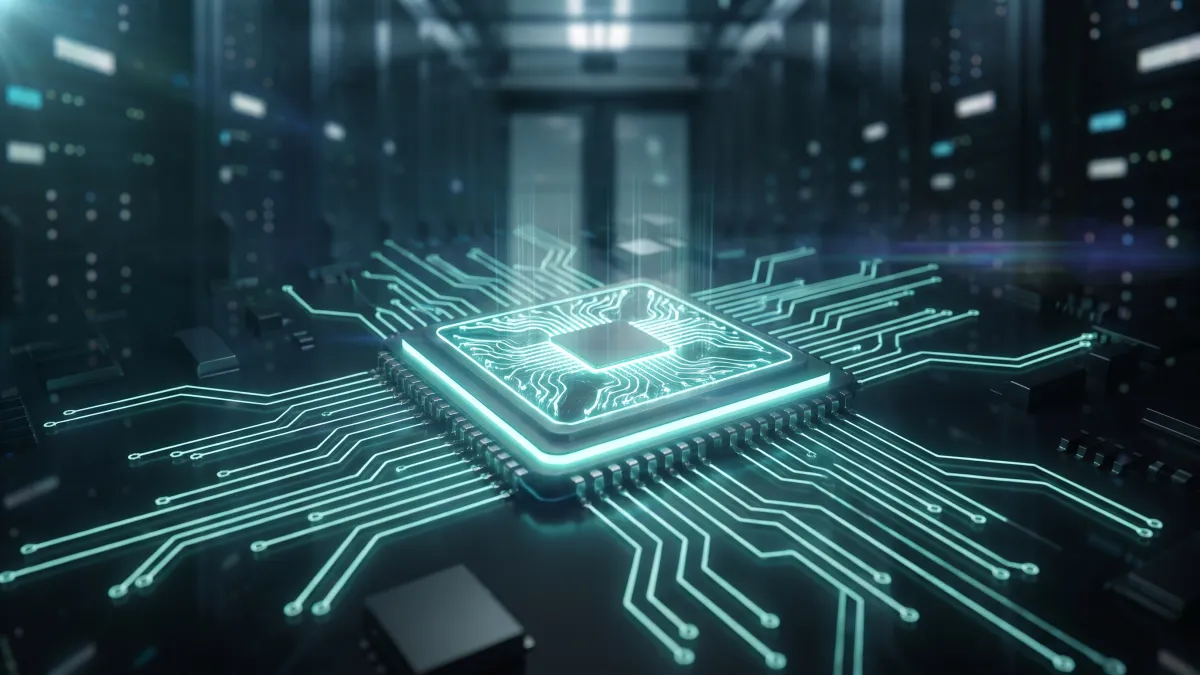
Imec's new 22nm IEEE 802.15.4ab NBA receiver leverages 5-6GHz signaling to quadruple UWB ranging distance in interference-heavy IoT environments.
If you have spent any time trying to get smart devices to talk to each other in a densely packed apartment building, you already know the frustration of wireless interference. Ultra-Wideband (UWB) was supposed to be our silver bullet for this—a technology that promised pinpoint spatial awareness and seamless device handshakes. But in my experience, while UWB is brilliant at close range, it has historically struggled with power consumption and scalability the moment you step too far away or introduce a noisy Wi-Fi network.
That is finally changing. Right in our backyard at the IEEE IMS/RFIC Symposium in San Francisco this past June, Belgian research hub Imec unveiled something that feels like a quiet revolution for device connectivity. They showcased the world's first IEEE 802.15.4ab-compliant narrowband receiver chip.
While the name is a mouthful, the real-world implication is simple: they have figured out how to quadruple UWB's ranging distance up to 100 meters, even in the most interference-heavy IoT environments.
The mechanics of narrowing the noise
To understand why this matters for the end-user, we have to look at how UWB traditionally operates. Historically, it relied on power-hungry wideband pulses in the 6-10GHz range just to discover nearby devices and measure their distance. It is the equivalent of shouting across a crowded room to get someone's attention—it works, but it takes a lot of energy and gets drowned out easily.
The new IEEE 802.15.4ab standard introduces a mechanism called Narrowband Assistance (NBA), which was originally proposed by Apple to fix these exact link-budget and scalability issues. Instead of shouting, the devices use a secondary 5-6GHz narrowband link to handle the initial handshake and synchronization. It requires far less power, travels significantly further, and only triggers the heavy-duty Multi-Millisecond (MMS) UWB energy accumulation when it is time for precise ranging.
Imec's 22nm CMOS chip is the first silicon to actually validate this architecture. The brilliance of their design lies in how it handles the congestion of the 5-6GHz band—which is heavily encroached upon by Wi-Fi 6E. By integrating a novel second-order transimpedance amplifier (TIA) and an adaptive clip detector, the chip dynamically filters out adjacent Wi-Fi interference. It preserves the weak NBA signals without distorting them, keeping the connection stable even when your neighbor's router is working in overdrive.
Designing for accessibility and intuitive experiences
When we talk about pushing UWB out to a 100-meter range—and seeing up to a 32-fold improvement when integrated into a full transceiver—we are really talking about removing user friction.
Think about accessibility. High-precision indoor navigation is a lifeline for visually impaired users navigating transit centers or large public buildings. A 100-meter UWB range means fewer dead zones, faster location locking, and a much smoother, more reliable experience that does not drain a smartphone battery in twenty minutes.
It also shifts UWB from a tool of convenience—like unlocking your car door as you walk up to it—to a foundational technology for safety-critical applications. We are seeing a major push toward automotive Child Presence Detection (CPD) and Industry 4.0 robotics. In these scenarios, the technology has to be invisible and it has to be infallible. If a robotic arm in a warehouse or a sensor in a hot car needs to detect micro-movements, the underlying network cannot drop simply because a nearby Wi-Fi network spiked in traffic.
Commercial momentum and the inevitable security questions
What makes this development particularly exciting is that it is not just a theoretical lab experiment. The industry is moving in lockstep. At the same San Francisco conference, Samsung presented parallel research on their own area-efficient NBA-MMS UWB receiver, proving that multiple consumer electronics giants are actively competing to perfect this architecture.
We are also already seeing commercial integration. Back in March 2026, Qualcomm announced the FastConnect 8800 mobile connectivity system. As a 6nm single-chip solution integrating Wi-Fi 8, Bluetooth 7.0, and this new 802.15.4ab UWB standard, it signals that these capabilities will be in our pockets sooner rather than later. The promise of Low-Energy UWB (LE-UWB) wake-up radios and gigabit data streaming is right around the corner.
However, whenever we introduce a new handshake mechanism, we have to look closely at the vulnerabilities. By relying on the 5-6GHz band for initial synchronization, we are introducing potential denial-of-service risks via 5-6GHz jamming. If a bad actor can jam the narrowband handshake, the entire UWB ranging process fails before it even begins. For a smart home lock, that is an annoyance; for an industrial robot or a child safety sensor, it is a critical failure.
Adding to that, the increased silicon complexity required to pull off these adaptive filtering techniques means we might see a slower trickle-down to cheaper, everyday IoT devices.
Still, the trajectory is incredibly promising. By offloading the hardest part of the connection process to a more efficient frequency, Imec and the broader industry are allowing UWB to finally live up to its potential. It is a massive step forward in making our connected environments feel less like a web of competing signals, and more like a single, intuitive ecosystem.
References
- https://www.imec-int.com/en/press/imec-unlocks-fourfold-uwb-range-extension-using-world-first-narrowband-receiver-chip
- https://www.iotinsider.com/industries/communications/imec-unveils-worlds-first-ieee-802-15-4ab-uwb-receiver/
- https://www.imec-int.com/en/5G-and-wireless-iot-communication/ultra-wide-band-uwb-technology
- https://www.imec-int.com/en/press/imec-pioneers-unique-low-power-uwb-receiver-chip-10x-more-resilient-against-wi-fi-and-beyond
- https://ims-ieee.org/sites/ims/files/content_images/RFIC/PB_Archive/rfic2026_program_book.pdf
- https://www.litepoint.com/blog/uwb-is-here-to-stay-now-what/
- https://www.electronics-lab.com/category/comm-networking/
- https://www.imec-int.com/en/articles/next-gen-uwb-radio-technology-enable-radar-sensing-data-streaming-and-advanced-ranging
- https://www.qorvo.com/design-hub/blog/unlocking-the-future-how-uwb-is-reshaping-secure-access-in-the-connected-world
- https://www.allpcb.com/allelectrohub/low-power-uwb-chip-achieves-14-mm-ranging-accuracy
- https://www.usenix.org/system/files/usenixsecurity23-anliker.pdf
- https://ims-ieee.org/technical-program-view/2349
- https://cyberraiden.wordpress.com/2026/03/04/qualcomm-fastconnect-8800-unveiled-4x4-wi-fi-8-bluetooth-7-uwb-thread-and-centimeter-level-proximity-ai-in-one-chip/
- https://holstcentre.com/insights/news/archive/imec-pioneers-ultra-wideband-transmitter-chip-that-pushes-data-rates-up-to-1-66gb-s-with-milliwatt-power-/
- https://siliconsemiconductor.net/video/477/Imec_pioneers_unique,_low-power_UWB_receiver_chip
- https://institutionofelectronics.ac.uk/next-gen-uwb-radio-to-enable-radar-sensing-and-data-streaming-applications/
- https://vertexaisearch.cloud.google.com/grounding-api-redirect/AUZIYQE7b4Mx_wmIXEIOangvbQ8X0pcVCortB1QxDKKPch-6B_N32Jc2ztvqcbITfP2ZSV-F9TPQ7_NVUnOp-rOVnHn-suMIVQ7y0go_KDP8CqNar7vUa_wE8Nqq0zQuAhXRK9HkeI67rndABAglgZMZrxW2AiS0UHxtvg5r89unfytt-DKPqly1bVP_gpT9UUlvDjKXQXM79J3-weUVVZ0kcKHNZpM7OSc5_N8yQed1u64OxsCwopDFZ32TCXtOUvPmy5mML0R4fTcfjmiKONlT_SCGlLOMBV_aRSYWqLEyySSnQ5YLDPCCK1iYXPb0Q5lfJzo-vzUXoQfoT6t6jZb3lKf6uNjHi61lE2LRGzbQAKtn2CMHUbj2DJLad1F6QTgjSjLISnMpd5WfBG2Puio3WqEi1xrXQYHX8XOB4Zv9TrBlx0peieoWR4pHUhFtuUM1e0IVb3B-JF-GR8QJkA7RZ_c2
- https://www.rohde-schwarz.com/au/solutions/wireless-communications-testing/landingpages/white-paper-exploring-the-future-of-uwb-comprehensive-insights-into-ieee-802.15.4ab_258350.html
- https://www.scribd.com/document/1011634802/NeedCode-IEEE-802-15-4ab-vs-IEEE-802-15-4z
- https://arxiv.org/html/2407.00682v1