Tuesday 29 September 2026, 09:04 PM
LoRa Alliance eliminates manual IoT provisioning with TS014 and TS018 specs
The LoRa Alliance's August 2026 TS014 and TS018 specs eliminate manual IoT provisioning bottlenecks via API-driven profile fetching and QR code onboarding.
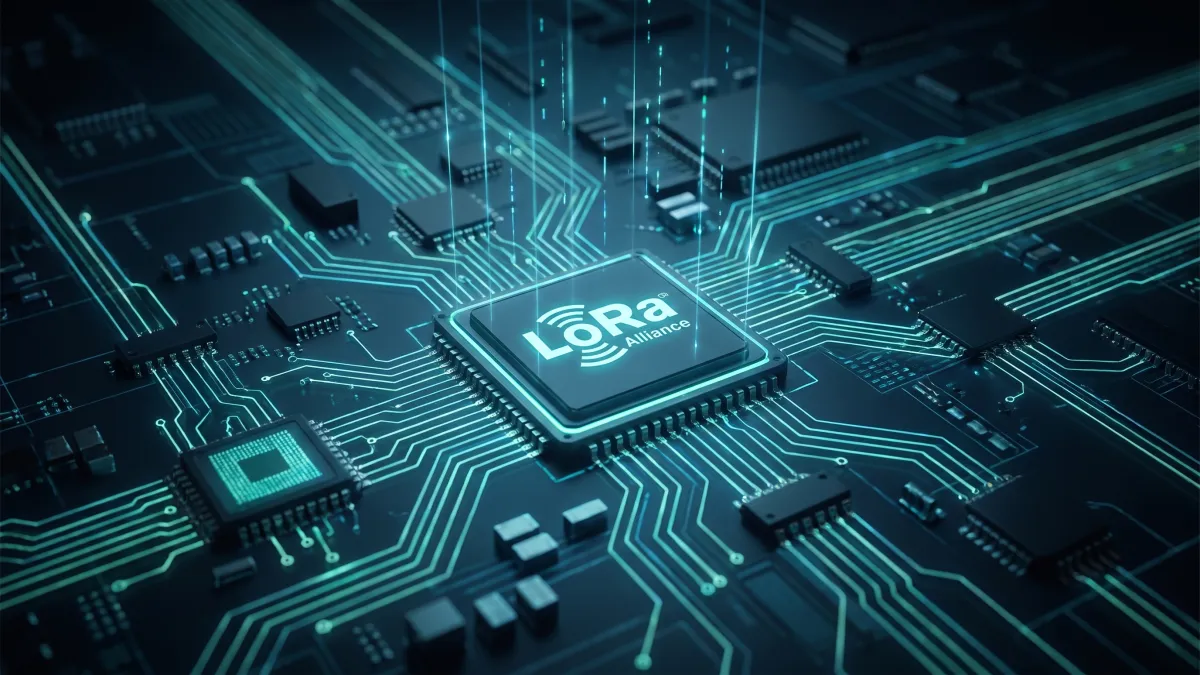
In September 2026, the LoRa Alliance announced that LoRaWAN had crossed 150 million deployed devices globally. Hitting that kind of volume forces a protocol to grow up. You can no longer rely on technicians manually typing cryptographic keys into a terminal. To fix this onboarding bottleneck, the Alliance released a trio of specifications in August—TS014, TS018, and TR016—designed to bring zero-touch provisioning to the ecosystem. The pitch is straightforward: eliminate human error and speed up deployments. But looking closely at the architecture, this shift toward automation introduces a new set of centralized dependencies that network administrators need to carefully evaluate.
Trading keystrokes for API calls
Historically, bringing a LoRaWAN sensor online required manual entry of complex device profiles. If your deployment involves tens of thousands of units, that data entry quickly consumes your operating budget.
The new TS018 specification attempts to bypass this by standardizing a QR code printed directly on the hardware. Scanning the code reveals a Device Profile Server (DPS) URL. From there, the network management system uses the TS014 protocol—specifically a Git-versioned OpenAPI specification tied to commit hash 073dfd477809836ab76ad18d873dbadf89aade56—to fetch the exact operational profile from the manufacturer. Field workers do not need to understand network topology. They scan the hardware, the Home Network Server talks to the DPS, and the device connects.
The reality of scale
During the August rollout, LoRa Alliance CEO Alper Yegin highlighted Halter, a member company operating over one million solar-powered smart cattle collars. At that scale, zero-touch provisioning is an absolute requirement. You cannot manually onboard a million cows.
Yet, when I look at standard enterprise rollouts, most logistics or smart city deployments operate on a much smaller footprint. Setting up the backend infrastructure to support these automated API handshakes adds overhead. While the industry frames this as a universal fix for LPWAN scalability, the return on investment heavily favors enterprise deployments pushing into the hundreds of thousands of units. For smaller fleets, the added complexity might outweigh the benefits of skipping manual entry.
Shifting the vulnerability
By chasing the plug-and-play simplicity of cellular IoT, LoRaWAN is fundamentally changing its trust model. The protocol is moving away from decentralized, local administration toward a heavy reliance on manufacturer-hosted servers.
If a hardware vendor takes their Device Profile Server offline for maintenance—or goes out of business—your automated deployment pipeline breaks. More concerning is the supply chain security angle. Compromising a vendor's server could allow bad actors to inject malicious profiles directly into an enterprise network during the onboarding handshake. We are effectively trading a local administrative bottleneck for a remote attack vector.
Pushing into the concrete
Alongside the provisioning updates, the TR016-1.0.0 release offers technical recommendations for battery-operated range extenders. This is a pragmatic acknowledgment of physical network limits. Getting a reliable RF signal into an underground utility vault usually requires installing an expensive, full-scale gateway. TR016 allows automated onboarding to reach these challenged environments using cheaper relays.
It solves the immediate connectivity problem, but it also means deploying another battery-powered node that will eventually require a truck roll for maintenance.
Standardizing the interface between the Home Network Server and the Device Profile Server is a necessary evolution for LoRaWAN. The strict commit hash ensures cross-vendor interoperability, which the ecosystem desperately needed to mature. However, treating TS014 and TS018 purely as operational upgrades ignores the architectural cost. By routing device profiles through third-party servers, you are shifting the deployment burden from the field technician's clipboard to the IT security team's firewall. Network architects must now treat every manufacturer's DPS as critical infrastructure, auditing their uptime and security posture just as rigorously as the physical sensors themselves.
References
- https://www.networkworld.com/article/4205179/moo-lorawan-makes-it-easier-to-connect-more-things-to-the-low-power-networking-protocol-even-cattle.html
- https://resources.lora-alliance.org/technical-specifications/ts018-1-0-0-lorawan-device-identification-qr-codes-for-automated-onboarding
- https://vertexaisearch.cloud.google.com/grounding-api-redirect/AUZIYQFAwXIQvmK6Xhq5FpEjkXNrCSQTOo0wn5JgGqeq23poOUQUQ3Nn08W08DTOo-X1e1Ir2HF1JOvI8At3OVCNeCqXJuZfBUjzNAdFhwl7mmRnx0EI_TK-yoGXcZePZEvcqYgdHa54RiRY9L0dL12wW2twLIsrCMGjT1avIS0cqQm2f0ZvsjmWuR8h9mJO1KZs87Ed57dvKOwGM7N2ylrtrJj7E5P9ll4CVuYQA8pl9ViiIEi2
- https://read.uberflip.com/i/1543540-ts014-1-0-0-end-device-capabilities-api/5
- https://www.computerweekly.com/news/366648633/LoRa-Alliance-aims-for-faster-simpler-scalable-LoRaWAN-deployments
- https://resources.lora-alliance.org/document/tr005-lorawan-device-identification-qr-codes