Tuesday 20 October 2026, 01:05 PM

Why Intel is killing SGX to bet its confidential computing future on TDX
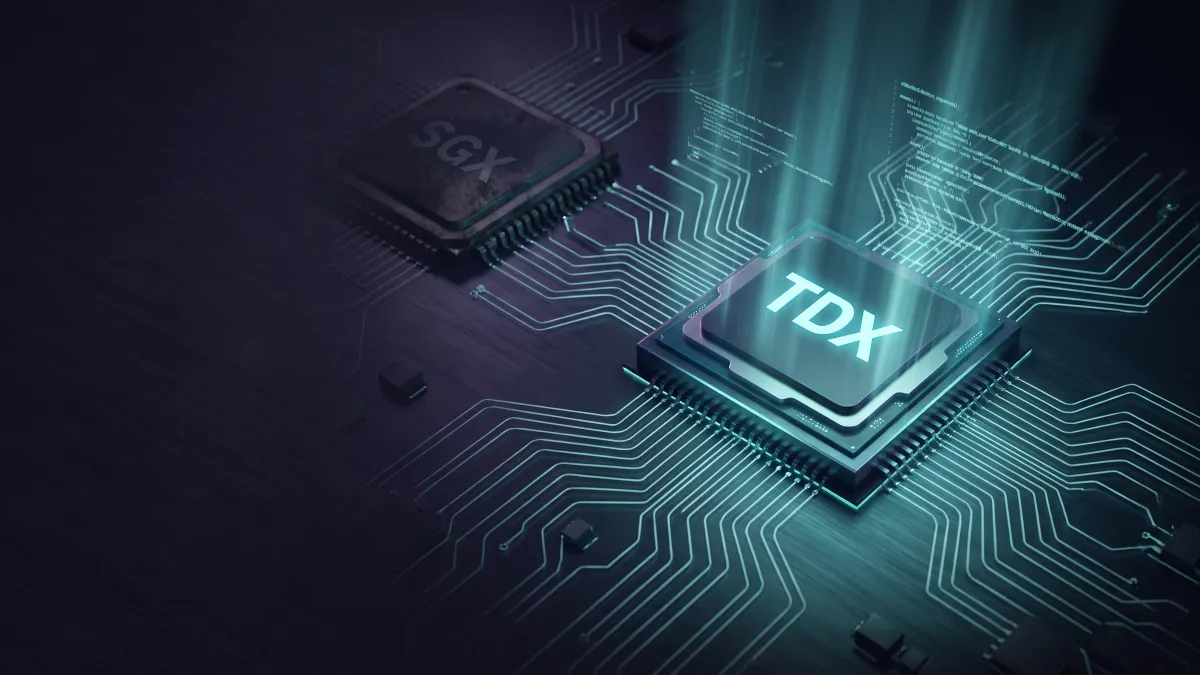
Intel will phase out SGX after its Diamond Rapids Xeon CPUs, shifting its confidential computing strategy entirely to VM-level Trust Domain Extensions (TDX).
On October 9, 2026, Intel's Mike Ferron-Jones made the call: the upcoming "Diamond Rapids" Xeon platform, slated for mid-2027, will be the end of the line for Software Guard Extensions (SGX). From that point forward, Intel is putting its confidential computing chips entirely on Trust Domain Extensions (TDX).
I've spent enough time around infrastructure teams to know exactly why this happened. SGX was a fascinating piece of engineering. It gave us hyper-granular, intra-application defense-in-depth. Even if a guest OS was completely compromised, your enclave was supposed to be safe. But there was a catch, and it was a dealbreaker for product-market fit: you had to rewrite your legacy applications to use it.
Engineering teams simply do not have the cycles to refactor millions of lines of code just to satisfy a hardware security model. The market spoke, and the path of least resistance won.
You could see the writing on the wall two days before Intel's announcement. Microsoft Azure declared it will retire "Always Encrypted with Intel SGX enclaves" in Azure SQL Database by October 31, 2027. They are routing customers toward Virtualization-Based Security (VBS) enclaves or standard compute tiers instead. When a major cloud provider sets a hard deprecation date on a hardware feature, the underlying silicon adapts to match.
This brings us to TDX. Instead of isolating specific application components, TDX operates at the virtual machine level. It is a pure "lift and shift" play. Cloud providers can offer turnkey confidential computing, and enterprise IT can run existing workloads securely without touching the codebase. Intel explicitly stated that killing SGX isn't a reaction to its historical side-channel vulnerabilities. They are following enterprise demand for VM-level isolation. It standardizes Intel's approach with what AMD and ARM are already doing.
This architectural pivot also solves a very real scaling problem for modern infrastructure, specifically around Agentic AI. Today's AI workloads don't just sit on a CPU; they require constant data transfers between the CPU and GPU. Securing that pipeline used to be a headache. TDX facilitates these transfers through new PCIe "bounce buffer" architectures, allowing encrypted data to move seamlessly between CPU and GPU Trusted Execution Environments (TEEs). It is about making secure infrastructure scale horizontally without creating new bottlenecks. Looking further out, Intel is even baking post-quantum cryptographic (PQC) protocols into the TDX roadmap to defend against future "harvest now, decrypt later" quantum attacks.
The winners and losers here are clearly defined. Cloud providers and enterprise IT departments win the scalability game. They get hardware-isolated security without the deployment hurdles.
The losers are the engineering teams who actually bought into the SGX promise. If you spent the last few years rewriting your software for SGX compliance, you are now holding technical debt. You also lose that hyper-granular security model. Intel is offering a long-tail support window with security updates for existing SGX platforms into the early 2030s, but the ecosystem is moving on. The industry chose deployment reality over architectural purity.
References
- https://www.igorslab.de/en/intel-ends-sgx-with-diamond-rapids-future-xeon-processors-use-tdx-instead-of-protected-enclaves/
- https://www.intel.com/content/www/us/en/newsroom/opinion/confidential-computing-growing-momentum-sharpened-focus.html
- https://www.tomshardware.com/pc-components/cpus/intel-to-phase-out-sgx-after-xeon-diamond-rapids-in-favor-of-tdx-confidential-computing-pivot-adds-trusted-i-o-and-post-quantum-crypto-for-agentic-ai
- https://www.ovhcloud.com/en/bare-metal/intel-software-guard-extensions/
- https://hyper.ai/en/stories/e2066edc48a1a484b6f1bfc039068a20
- https://think.in2p3.fr/2026/03/16/confidential-ai-with-gpu-acceleration-bounce-buffers-offer-a-solution-today/
- https://www.youtube.com/watch?v=s-wAqzK5Q-8
- https://www.guru3d.com/story/intel-reportedly-plans-to-retire-sgx-after-diamond-rapids/
- https://techcommunity.microsoft.com/blog/azuresqlblog/azure-sql-database-is-retiring-always-encrypted-with-intel-sgx-enclaves/4556565
- https://www.cloudpulsebriefs.com/briefs/569236/?utm_source=mastodon
- https://www.techtimes.com/articles/328955/20261014/intel-ends-sgx-era-diamond-rapids-pivots-confidential-computing-fully-tdx.htm